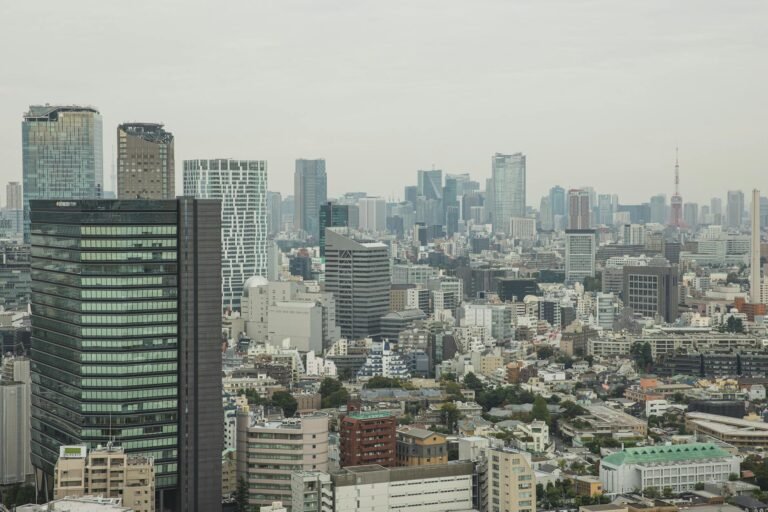
Most Western professionals who think about Japan still operate on a 2010 understanding of what the country wants from them.
In 2010, Japan was hard to immigrate to, hostile to permanent settlement, and structurally closed to non-Japanese leaders in most companies. The conventional advice was: do not bother trying to build a long-term career in Japan unless you marry in or got hired through a specialized Japan-desk pathway from your home country.
That model is now obsolete. The Japanese government has spent the last seven years actively dismantling the barriers to foreign professionals. The pace and scope of the changes have not been widely covered in Western business press.
Here is what is actually happening.
THE SPECIFIED SKILLED WORKER (SSW) FRAMEWORK
Introduced in 2019. Expanded in 2023. Targets 14 industries facing acute labor shortages — construction, agriculture, nursing care, food service, manufacturing, hospitality, automotive maintenance, aviation, fishery, accommodation, building cleaning, electrical/electronic information industries, ship machinery, and industrial machinery.
SSW Type 1 grants up to 5 years of work authorization. SSW Type 2 — expanded in 2023 to cover essentially all SSW occupations — has no upper limit on renewals and creates a pathway to permanent residency.
This is the working-class and skilled-trades opening. For many roles, the language requirement is conversational Japanese (roughly JLPT N4 level). The Japanese government is openly recruiting through bilateral agreements with the Philippines, Indonesia, Vietnam, Thailand, Cambodia, Mongolia, Myanmar, Nepal, and several other countries.
THE HIGHLY SKILLED FOREIGN PROFESSIONAL VISA
Points-based system designed to fast-track senior international talent. Targets engineers, researchers, executives, entrepreneurs, and other specialized professionals.
Points are awarded for academic background, work experience, salary, age, Japanese language ability, and qualifications. A score of 70+ qualifies. A score of 80+ accelerates the pathway to permanent residency to as little as one year.
Japanese language ability is one of the most controllable point categories. JLPT N1 grants 15 points. JLPT N2 grants 10 points. The same applicant can move from “qualified” to “fast-tracked” through language alone.
THE J-FIND AND J-SKIP VISAS
Introduced in 2023. Both target the global graduate and high-earning specialist talent pool.
J-Find allows recent graduates from top-100 global universities (per QS, THE, or Shanghai Jiao Tong rankings) to enter Japan for up to two years of job search activity. No employer sponsorship required.
J-Skip targets specialists with sufficient academic credentials, work experience, or annual income. The income threshold (currently approximately ¥20 million annually, equivalent to roughly $130-150K) qualifies a specialist for accelerated permanent residency.
These visas are explicit signals. Japan is no longer waiting for foreign talent to find their own way in. The government is reaching outward.
WHY THIS IS HAPPENING
Japan’s working-age population (15-64) is in structural decline. The country lost approximately 13 million working-age people between 2000 and 2024. Projections suggest another 12-15 million by 2050.
Domestic responses to this — automation, productivity reforms, encouraging higher labor participation among women and older workers — have not closed the gap. The remaining variable is foreign labor.
This is not a temporary policy adjustment. The demographic math will not reverse for at least 30 years. The current visa generosity is the leading edge of what will be a multi-decade structural shift.
WHAT THIS MEANS FOR LANGUAGE LEARNERS
Japanese language ability is the single highest-leverage variable for accessing this shift profitably.
A professional who arrives in Japan with no Japanese is largely confined to fully English-functional teams at multinational subsidiaries. The growth opportunities — leadership at Japanese companies, equity participation in startups, high-trust relationships with senior Japanese counterparts — are not accessible without language.
A professional who arrives with conversational Japanese is routed to a fundamentally different opportunity set. A professional who arrives with business-functional Japanese (keigo, written correspondence, meeting structures) is competitive for senior roles that command premiums of 30-50% over English-only equivalents.
The first practical Japanese moments after arrival are the keigo phone calls — bank, mobile carrier, city hall, residence registration. A Sakura Mobile eSIM with an included Japanese number is what most relocators set up before they land, because every form on Day One requires a Japanese phone number, and every form is also a real-world keigo drill you cannot rehearse in advance.
THE TIMING ARGUMENT
The Japanese government’s current recruitment posture is unusually open. As the talent shortage stabilizes — through automation, productivity gains, or successful foreign-worker absorption — policy bias toward foreign recruitment will moderate.
The next five to seven years are likely the most accessible window in modern Japanese history for foreign professionals to establish careers in the country. After that, the welcome mat becomes thinner — not gone, but more competitive.
For professionals weighing whether the Japanese language investment is worth it: the policy environment is your tailwind right now. It will not be this favorable in 2032.
Were you aware of the scope of these visa changes?