In most languages, there are four seasons and a handful of words for weather. In Japanese, there are 72.
That’s not a figure of speech. Japan’s traditional calendar — the 七十二候 (shichijūni kō) — divides the year into 72 micro-seasons, each lasting roughly five days and named after a specific natural event. “Bush warblers begin to sing.” “Bamboo shoots emerge.” “The soil receives its first frost.” Each one has a name, a date range, and centuries of cultural weight behind it.
Modern Japanese people don’t walk around reciting all 72. But the seasonal consciousness they represent is woven into the language at every level — from formal business emails to casual small talk to the way food is described, sold, and eaten. If you’re learning Japanese and ignoring the seasonal layer, you’re missing one of the richest and most practical dimensions of the language.
Why Seasons Run So Deep in Japanese
Japan’s geography plays a role. Stretching from subarctic Hokkaido to subtropical Okinawa, the archipelago experiences dramatic seasonal shifts. But geography alone doesn’t explain it. Plenty of countries have four distinct seasons without building an entire linguistic and cultural infrastructure around them.
What makes Japan different is that seasonal awareness became formalized — in poetry, in cuisine, in correspondence, in etiquette. The 二十四節気 (nijūshi sekki — 24 solar terms) system, originally adapted from China, was further refined into the 72 micro-seasons that track nature with almost obsessive precision. This system shaped haiku (where a seasonal reference word, or 季語 / kigo, is required), the tea ceremony (where every element reflects the season), and formal letter writing.
The result is a language where seasonal references aren’t poetic flourishes — they’re expected. They’re how you show awareness, build rapport, and demonstrate cultural literacy.
時候の挨拶 (jikou no aisatsu) — Seasonal Greetings in Correspondence
If you ever write a formal Japanese letter or business email, you’ll encounter 時候の挨拶 (jikou no aisatsu) — seasonal greetings that open the correspondence. These aren’t optional. In formal writing, omitting the seasonal greeting is like omitting “Dear” from an English letter — technically the content still works, but the social signal is wrong.
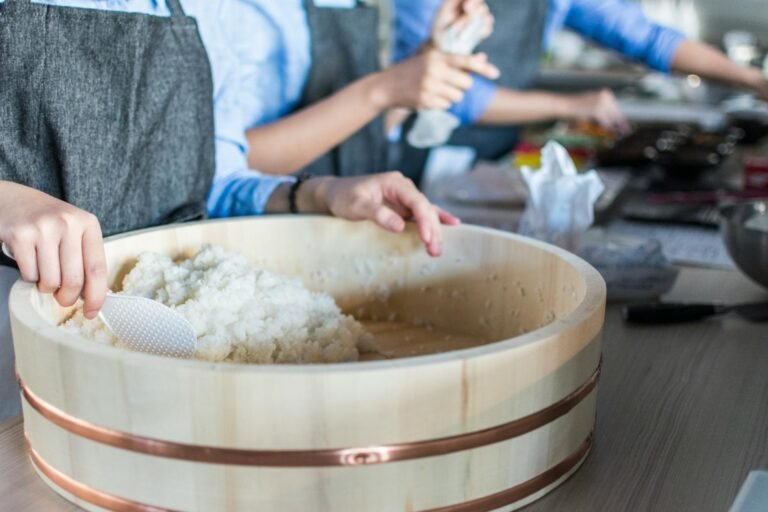
Japanese cuisine revolves around shun (旬) — ingredients at their peak season. A seasonal Japanese cooking class lets you taste the vocabulary you are studying, from spring takenoko to autumn matsutake.
The format typically works like this: you open with 拝啓 (haikei — “Dear Sir/Madam”), immediately followed by a seasonal phrase, then a wish for the recipient’s health or prosperity, and finally the body of your message.
Here are examples for each season:
Spring (March – May)
春暖の候、ますますご清祥のこととお喜び申し上げます。
(Shundan no kō, masumasu goseishō no koto to oyorokobi mōshiagemasu.)
“In this season of spring warmth, I hope you are in continued good health and prosperity.”
Less formal: 桜の便りが届く季節となりました。 (Sakura no tayori ga todoku kisetsu to narimashita.) — “The season when news of cherry blossoms arrives has come.”
Summer (June – August)
盛夏の候、いかがお過ごしでしょうか。
(Seika no kō, ikaga osugoshi deshō ka.)
“In the height of summer, how are you faring?”
Mid-summer has its own tradition: 暑中見舞い (shochū mimai) — summer greeting cards sent during the hottest period, roughly mid-July to early August. After 立秋 (risshū — the start of autumn, around August 7), these shift to 残暑見舞い (zansho mimai) — “lingering heat” greetings. Getting the timing wrong — sending a shochū mimai after risshū — shows you’re not paying attention to the calendar.
Autumn (September – November)
秋涼の候、ますますご健勝のこととお慶び申し上げます。
(Shūryō no kō, masumasu gokenshō no koto to oyorokobi mōshiagemasu.)
“In this season of autumn coolness, I hope you are in ever-better health.”
Less formal: 紅葉の季節を迎えましたが、いかがお過ごしでしょうか。 (Kōyō no kisetsu wo mukaemashita ga, ikaga osugoshi deshō ka.) — “We’ve entered the season of autumn leaves — how have you been?”
Winter (December – February)
厳寒の候、お変わりなくお過ごしでしょうか。
(Genkan no kō, okawarinaku osugoshi deshō ka.)
“In this season of severe cold, are you well?”
The end of the year brings 年末年始 (nenmatsu nenshi) greetings, and New Year’s cards — 年賀状 (nengajō) — are one of Japan’s most important correspondence traditions. These must arrive on January 1st, which means posting them in mid-December.
Seasons in Everyday Conversation
You don’t need to write formal letters to encounter seasonal language. It shows up in everyday Japanese constantly.
Weather as Social Glue
In English, weather talk is filler — something you resort to when you have nothing else to say. In Japanese, weather talk is genuine social currency. Seasonal observations show attentiveness and shared experience.
- 蒸し暑いですね (mushiatsui desu ne) — “It’s humid, isn’t it?” The go-to summer greeting. 蒸し暑い (mushiatsui) specifically describes the heavy, sticky heat of Japan’s rainy season and summer — a word English doesn’t have a clean equivalent for.
- 日が短くなりましたね (hi ga mijikaku narimashita ne) — “The days have gotten shorter, haven’t they?” A natural autumn conversation opener.
- 花粉症ですか (kafunshō desu ka) — “Do you have hay fever?” From February through April, pollen allergies are so widespread that they’ve become a legitimate seasonal greeting topic.
Food and 旬 (shun) — Peak Season
Japanese food culture is inseparable from the calendar. The concept of 旬 (shun) — the peak moment when an ingredient is at its most flavorful and nutritious — organizes how Japanese people talk about, shop for, and eat food.
Shun actually encompasses three phases:
- 走り (hashiri) — the early arrival, delicate and anticipated
- 旬 (shun) — the peak, full flavor
- 名残 (nagori) — the last of the season, bittersweet
This vocabulary shows up at every level of daily life. A supermarket will label produce with seasonal markers. A restaurant menu changes not just with the seasons but with the micro-seasons. And in conversation, mentioning seasonal food is a natural way to connect:
- 今年の秋刀魚はどうですか (kotoshi no sanma wa dō desu ka) — “How’s the pacific saury this year?” A perfectly normal autumn question.
- たけのこの季節ですね (takenoko no kisetsu desu ne) — “It’s bamboo shoot season, isn’t it?” Spring small talk.
- 鍋の季節になりましたね (nabe no kisetsu ni narimashita ne) — “It’s become hot pot season, hasn’t it?” Winter warmth.
Seasonal Words You Should Know
Here’s a practical vocabulary set organized by season — words that come up in real conversation, not just poetry.
Spring
- 花見 (hanami) — “flower viewing,” specifically cherry blossom viewing parties
- 花粉 (kafun) — “pollen,” the unofficial start of spring for many Japanese people
- 新学期 (shingakki) — “new school term,” Japan’s school year starts in April
- 衣替え (koromogae) — “changing of clothes,” the traditional switch to lighter clothing on June 1
Summer
- 梅雨 (tsuyu) — “plum rain,” Japan’s rainy season in June-July. The word is poetic; the experience is damp.
- 夏バテ (natsubate) — “summer fatigue,” the physical exhaustion from heat and humidity. Entire food categories exist to combat it.
- 花火大会 (hanabi taikai) — “fireworks festival,” the defining event of Japanese summer
- お盆 (obon) — the Buddhist festival of the dead in mid-August, when many people return to their hometowns
Autumn
- 紅葉 (kōyō/momiji) — “autumn leaves,” with two readings: kōyō for the phenomenon, momiji for the maple leaves specifically
- 食欲の秋 (shokuyoku no aki) — “autumn of appetite,” a common phrase reflecting the season’s association with rich food
- 読書の秋 (dokusho no aki) — “autumn of reading,” one of several “autumn of…” phrases that define the season’s character
- 秋刀魚 (sanma) — “pacific saury,” the fish whose kanji literally contains the character for autumn
Winter
- 年末 (nenmatsu) — “year-end,” the busy period of wrapping up the year
- 大掃除 (ōsōji) — “big cleaning,” the year-end deep clean of homes and offices
- 初詣 (hatsumōde) — “first shrine visit” of the new year
- 鍋 (nabe) — “hot pot,” winter’s signature communal meal
Why This Matters for Your Japanese
Seasonal language isn’t a niche topic for advanced learners. It’s practical from the intermediate level onward — and awareness of it is useful from day one.
When you can open a conversation with a seasonal observation, you’re doing what Japanese speakers do naturally. When you can recognize a jikou no aisatsu in a business email, you understand the structure of formal correspondence. When you know that 秋刀魚 (sanma) has the kanji for autumn baked into its name, you start to see how the language itself is organized around the calendar.
At Tabiji Academy, we integrate seasonal vocabulary into our lessons throughout the year — not as trivia, but as living language that connects you to how Japanese people actually experience and talk about their world. Because in Japanese, the calendar isn’t just a schedule. It’s a vocabulary.
Our founder Mie Suzuki grew up with these rhythms in Tokyo — the anticipation of the first 秋刀魚 in September, the precise timing of 年賀状 in December, the unwritten rule that you acknowledge the humidity before you talk about anything else in July. These aren’t things you find in a textbook. They’re things you learn from a teacher who lived them.