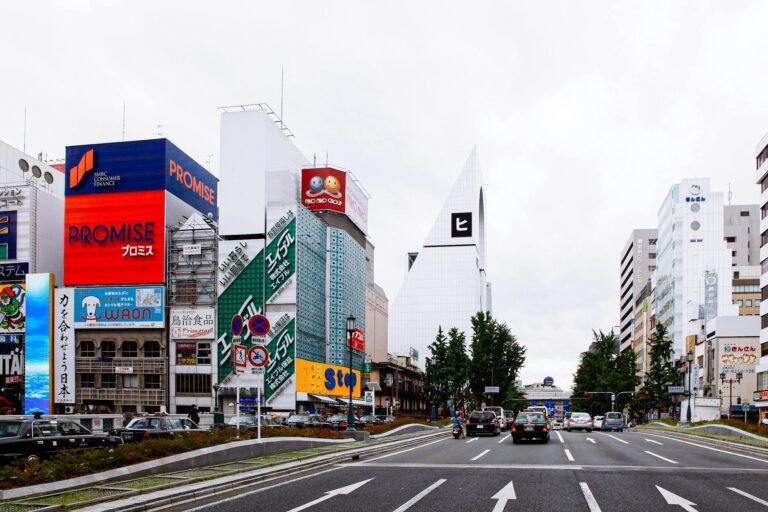
You wake up in a Shinjuku hotel room and something is wrong. Your forehead is hot, your stomach is churning, and the thermometer you packed confirms what you already suspected — you have a fever. The neon glow outside your window suddenly feels less exciting and more disorienting. You need medicine, maybe a doctor, and every sign you can see is in Japanese. This is the moment where a handful of the right words can change everything.
Getting sick while traveling is stressful anywhere, but Japan adds a particular layer of complexity. The healthcare system is excellent, yet it operates almost entirely in Japanese. Pharmacies are divided into types that serve different purposes. The forms you fill out assume you can read kanji. None of this is insurmountable. With the right vocabulary and a basic understanding of how things work, you can navigate a Japanese clinic or pharmacy with confidence, even when you feel terrible.
How Japan’s Healthcare System Works for Visitors
Japan’s universal healthcare system, built around National Health Insurance (NHI), covers residents who pay into the system — but short-term visitors on tourist visas are not eligible. If you are staying fewer than 90 days, you cannot enroll in NHI. That means you will pay the full uninsured rate for any medical care you receive.
Ready to speak Japanese with a real person?
Book Your First Lesson — $55The practical impact: a basic clinic visit without insurance typically costs between 5,000 and 10,000 yen. A first consultation at a hospital can run 20,000 to 50,000 yen depending on what tests are needed. Travel insurance is not yet mandatory for entry into Japan, though the government is actively moving toward requiring it — starting in fiscal year 2026, visitors with unpaid medical bills as low as 10,000 yen from previous trips may be denied re-entry.
The strong recommendation from JNTO, the Japan National Tourism Organization, is to purchase travel medical insurance before your trip. Most Japanese hospitals expect payment at the time of service, and many smaller clinics only accept cash.
Your Body in Japanese: Essential Anatomy Vocabulary
When you need to tell someone where it hurts, pointing helps — but naming the body part gets you there faster. These are the words you will use most often in a medical context.
- 頭 (atama) — head
- 喉 (nodo) — throat
- 胸 (mune) — chest
- 胃 (i) — stomach
- お腹 (onaka) — abdomen, belly
- 背中 (senaka) — back
- 耳 (mimi) — ear
- 目 (me) — eye
These words become immediately useful when paired with the single most important medical word in Japanese: 痛い (itai), which means “it hurts” or “painful.” To say where the pain is, put the body part first: 頭が痛いです (atama ga itai desu) — “My head hurts.” 喉が痛いです (nodo ga itai desu) — “My throat hurts.” お腹が痛いです (onaka ga itai desu) — “My stomach hurts.” This single sentence pattern will carry you through most of what you need to communicate at a clinic.
Describing Your Symptoms
Beyond pain, you will need to describe what is actually happening. Doctors need specifics, and even a rough attempt in Japanese signals good faith and helps the consultation move faster.
- 熱がある (netsu ga aru) — I have a fever
- 咳が出る (seki ga deru) — I have a cough
- 鼻水が出る (hanamizu ga deru) — I have a runny nose
- 吐き気がする (hakike ga suru) — I feel nauseous
- 下痢をしている (geri wo shiteiru) — I have diarrhea
- めまいがする (memai ga suru) — I feel dizzy
- 寒気がする (samuke ga suru) — I have chills
- だるい (darui) — I feel sluggish, fatigued
A useful phrase for the reception desk: 具合が悪いです (guai ga warui desu) — “I don’t feel well.” This is a general statement that works as an opener before you get into specifics. If you need to explain when things started, try 昨日から (kinou kara) — “since yesterday” — or 今朝から (kesa kara) — “since this morning.”
Finding a Clinic and Understanding the Types
Japanese medical facilities are broadly divided into clinics and hospitals, and knowing the difference matters. A 病院 (byouin) is a hospital — larger, with 20 or more beds, and often requiring a referral from a clinic. A クリニック (kurinikku) or 医院 (iin) is a smaller clinic, which is where you should go first for non-emergency issues.
Clinics are organized by specialty. The signs outside will tell you what they treat:
- 内科 (naika) — internal medicine (fevers, colds, stomach issues — your first stop for most illnesses)
- 外科 (geka) — surgery
- 耳鼻咽喉科 (jibi inkōka) — ear, nose, and throat (ENT)
- 皮膚科 (hifuka) — dermatology
- 眼科 (ganka) — ophthalmology
- 歯科 (shika) — dentistry
Most clinics open around 9:00 AM and close by 6:00 PM on weekdays, with a lunch break of one to two hours in the middle of the day. Many are open on Saturday mornings but closed Saturday afternoons, Sundays, and national holidays. Always call ahead or check online before making the trip.
The Registration Form: 問診票
When you walk into a clinic for the first time, the front desk will hand you a 問診票 (monshinhyō) — a medical questionnaire and intake form. This is where many travelers freeze. The form is almost always in Japanese, though larger hospitals in major cities sometimes offer multilingual versions. Japan’s Ministry of Health, Labour and Welfare publishes bilingual medical forms online that you can print and bring with you.
Here is what the form typically asks for and the vocabulary you will encounter:
- 名前 (namae) — name
- 生年月日 (seinengappi) — date of birth
- 住所 (jūsho) — address (your hotel address works)
- 電話番号 (denwa bangō) — phone number
- 症状 (shōjō) — symptoms
- アレルギー (arerugī) — allergies
- 現在飲んでいる薬 (genzai nondeiru kusuri) — medications you are currently taking
- 既往歴 (kiōreki) — medical history
Bring your passport — you will need it as identification since you will not have a Japanese health insurance card. If you have travel insurance, bring that documentation as well. Having your hotel name and address written in Japanese is helpful for the address field. This is one of those moments where having mobile data through an Airalo eSIM makes a real difference — you can pull up translation apps, your insurance details, and your hotel address right when you need them most.
At the Pharmacy: 薬局 vs. ドラッグストア
Japan has two distinct types of places where you can buy medicine, and they serve different purposes.
A 調剤薬局 (chōzai yakkyoku) is a dispensing pharmacy, typically located near hospitals and clinics. This is where you take your 処方箋 (shohōsen) — prescription — to be filled. These pharmacies are staffed by licensed pharmacists who will explain your medication, potential side effects, and proper dosage. An important detail: prescriptions in Japan are valid for only four calendar days, including the date they were issued, and weekends and holidays count. Do not wait.
A ドラッグストア (doraggu sutoa) is a drugstore — a larger retail shop that sells over-the-counter medicine alongside cosmetics, snacks, drinks, and household goods. Major chains like Matsumoto Kiyoshi, Welcia, and Tsuruha are everywhere in urban areas. You do not need a prescription to buy medicine here, but the products are classified by risk level.
Japan categorizes OTC medicines into three classes. 第1類医薬品 (dai-ichi-rui iyakuhin) — Class 1 — requires a pharmacist to explain the medication directly, kept behind the counter. 第2類医薬品 (dai-ni-rui iyakuhin) — Class 2 — includes most cold medicines and pain relievers. 第3類医薬品 (dai-san-rui iyakuhin) — Class 3 — covers vitamins, supplements, and lower-risk items on open shelves.
Common OTC Medicines You Can Buy at a Drugstore
When you need relief but not a doctor, these are the products to look for. All are widely available at any major drugstore chain.
- バファリン (Bafarin / Bufferin) — pain relief and fever reducer, available in several strengths including Bufferin Premium for stronger pain
- ロキソニン (Rokisonin / Loxonin) — a stronger anti-inflammatory and fever reducer with the active ingredient loxoprofen, available as Class 1 OTC
- ルルアタック (Ruru Atakku / Lulu Attack EX) — a comprehensive cold medicine covering throat pain, fever, cough, runny nose, and congestion
- 葛根湯 (Kakkontō) — a traditional herbal remedy (kampo) for early-stage colds, available as powder, liquid, or pills
- 太田胃散 (Ōta Isan) — an herbal stomach powder for nausea, indigestion, and stomach discomfort
- 正露丸 (Seirogan) — a well-known remedy for diarrhea, loose stools, and stomach upset, with a very distinctive smell
A few essential pharmacy vocabulary words to have ready:
- 薬 (kusuri) — medicine
- 風邪薬 (kazegusuri) — cold medicine
- 痛み止め (itamidome) — painkiller
- 胃薬 (igusuri) — stomach medicine
- 目薬 (megusuri) — eye drops
- 絆創膏 (bansōkō) — adhesive bandage
- 体温計 (taionkei) — thermometer
A phrase that works well at the drugstore counter: 風邪に効く薬はありますか (kaze ni kiku kusuri wa arimasu ka) — “Do you have medicine that works for a cold?” Swap 風邪 with 頭痛 (zutsū — headache), 下痢 (geri — diarrhea), or 熱 (netsu — fever) to ask about other conditions.
Talking to the Doctor
When you are in the examination room, clarity matters more than grammar. Short, direct sentences work. Here are phrases that cover the most common situations.
三日前から熱があります (mikka mae kara netsu ga arimasu) — “I have had a fever since three days ago.”
ここが痛いです (koko ga itai desu) — “It hurts here.” Point as you say it.
食欲がありません (shokuyoku ga arimasen) — “I have no appetite.”
アレルギーがあります (arerugī ga arimasu) — “I have allergies.” Follow with the specific allergen if you know it.
この薬を飲んでいます (kono kusuri wo nondeimasu) — “I am taking this medicine.” Show the package or a photo.
英語を話せる方はいますか (eigo wo hanaseru kata wa imasu ka) — “Is there anyone who speaks English?” Worth asking, especially in urban areas.
After the consultation, if the doctor writes you a prescription, they will likely explain the diagnosis and instructions briefly. Listen for these words:
- 風邪 (kaze) — cold
- インフルエンザ (infuruenza) — influenza
- 食中毒 (shokuchūdoku) — food poisoning
- 炎症 (enshō) — inflammation
- 感染 (kansen) — infection
Understanding Your Prescription
Once you have your 処方箋 (shohōsen), take it to the nearest 調剤薬局. The pharmacist will prepare your medicine and explain how to take it. Here is the vocabulary you will see on medication packaging and instruction sheets:
- 1日3回 (ichinichi sankai) — three times a day
- 毎食後 (maishokugo) — after every meal
- 食前 (shokuzen) — before meals
- 食間 (shokkan) — between meals
- 寝る前 (neru mae) — before bed
- 1回1錠 (ikkai ichijō) — one tablet per dose
Remember: foreign prescriptions are not accepted at Japanese pharmacies. You will need a prescription written by a Japanese doctor. If you take daily medication, bring enough supply from home and carry a note from your doctor listing the generic drug names.
Emergency Situations: When to Call 119
For a medical emergency, dial 119. This connects you to the fire department, which operates Japan’s ambulance service. When the operator answers, say 救急です (kyūkyū desu) — “I need an ambulance.” The operator will ask for your location, your symptoms, and your name.
Ambulance transport in Japan is free for everyone, including tourists — each dispatch costs approximately 45,000 yen, covered by taxes rather than the patient. The national average response time is about 10 minutes. Medical treatment at the hospital, however, is not free — that is where your travel insurance matters.
If you cannot communicate in Japanese, the 119 system supports multilingual interpretation through a three-way call with an interpreter in English, Chinese, Korean, Portuguese, and Spanish. You can also call the JNTO Japan Visitor Hotline at 050-3816-2787, available 24/7, with support in English, Chinese, and Korean. They can help you reach emergency services or find a nearby hospital.
Key emergency phrases:
- 助けてください (tasukete kudasai) — “Please help me”
- 救急車を呼んでください (kyūkyūsha wo yonde kudasai) — “Please call an ambulance”
- 意識がありません (ishiki ga arimasen) — “They are not conscious”
- 呼吸をしていません (kokyū wo shiteimasen) — “They are not breathing”
Insurance and Payment: What to Know Before You Go
Since NHI does not cover tourists, you are responsible for the full cost of any medical care. Travel insurance is the single most important thing you can arrange before your trip. Nearly 30 percent of tourists visiting Japan in late 2023 and early 2024 were found to be uninsured — and Japan is now tightening entry screening based on unpaid medical bills in response.
At the clinic or hospital, expect to pay at the time of your visit. Bring cash — many smaller clinics do not accept credit cards, though most hospitals do. Ask for a 領収書 (ryōshūsho) — receipt — and a 診断書 (shindansho) — medical certificate — if you plan to file an insurance claim later. Some insurers have cashless arrangements with specific hospitals in Japan, so check your policy before you travel.
A few payment-related words:
- 保険 (hoken) — insurance
- お支払い (oshiharai) — payment
- 現金 (genkin) — cash
- クレジットカード (kurejitto kādo) — credit card
- 領収書をください (ryōshūsho wo kudasai) — “Please give me a receipt”
You Are More Prepared Than You Think
Nobody plans to get sick in Japan. But fevers happen, stomachs rebel, and exhaustion from long travel days catches up with anyone. What separates a bad experience from a manageable one is preparation — and you now have the vocabulary, the system knowledge, and the key phrases to handle it.
Write down the essentials before you need them: the number 119 for emergencies, 050-3816-2787 for the JNTO visitor hotline, the phrase 具合が悪いです for “I don’t feel well,” and the word 内科 for the type of clinic that handles most common illnesses. Keep a photo of your travel insurance card on your phone. Know that ambulances are free and that drugstores are on nearly every major street.
Japanese healthcare is thorough, professional, and often surprisingly affordable even without insurance. The language barrier is real, but it is not a wall — it is a door that opens wider with every word you learn. If you want to build a stronger foundation in medical Japanese and everyday travel phrases before your next trip, explore our lesson plans at Tabiji Academy. A little preparation now means a lot of confidence later, especially on the days when you need it most.