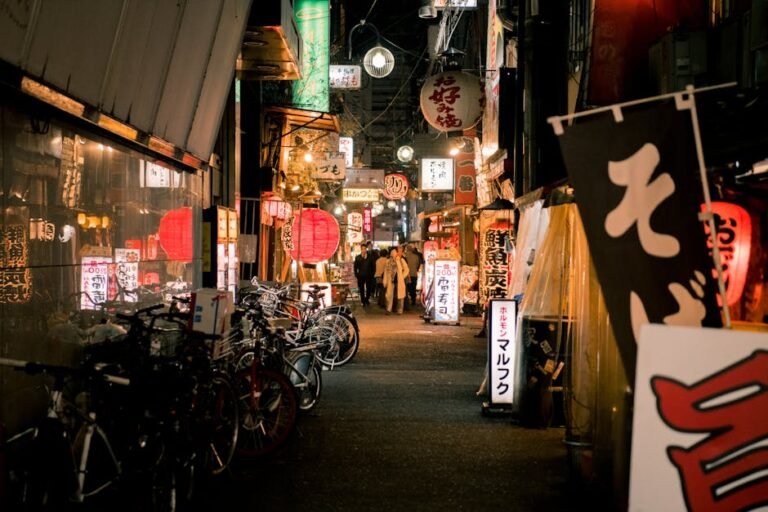
You step off the Shinkansen at Tokyo Station, and the first thing that hits you is not the crowd or the cold blast of platform air — it is the wall of signs. Kanji everywhere. Yellow boards, green boards, overhead panels flashing destinations in characters you half-recognize. A recorded voice announces something fast, and a tide of commuters splits around you like water around a stone.
This is the moment most visitors realize that Google Translate and pointing will only get them so far. But here is the thing: Japanese train stations are remarkably logical. The signage follows consistent patterns across the entire country, from rural single-platform stops in Tohoku to the 36-platform labyrinth of Shinjuku, the busiest station in the world with over 3.5 million passengers passing through daily. Learn a core set of kanji and phrases, and every station in Japan becomes readable.
That is exactly what we are going to do here. By the end of this article, you will know the kanji, vocabulary, and phrases that appear on virtually every sign in every Japanese train station. No abstract grammar drills — just the real language you will see the moment you arrive.
The Kanji That Run the Whole System
Before we get into specific signs, you need six kanji. These six characters appear so frequently in stations that learning them unlocks a disproportionate amount of comprehension.
駅 (eki) — station. This is the character you will see on every station name board. Tokyo Station is 東京駅 (Toukyou-eki). Kyoto Station is 京都駅 (Kyouto-eki). When you see 駅 at the end of a name, you know you are looking at a station label.
口 (kuchi / guchi) — mouth, or opening. This is the single most important kanji for navigation. It appears in exit names, entrance names, and gate names. Think of it as “opening” — the way in or out.
出 (de / shutsu) — to go out, to exit. Combine it with 口 and you get 出口 (deguchi) — exit. Literally “going-out opening.” You will see this on green signs throughout every station.
入 (iri / nyuu) — to enter. The counterpart to 出. Combined with 口, it gives you 入口 (iriguchi) — entrance. Literally “entering opening.”
線 (sen) — line. Every train line name ends with this character. The Yamanote Line is 山手線 (Yamanote-sen). The Chuo Line is 中央線 (Chuuou-sen). When you see 線 at the end of a word on a sign, you are looking at a line name.
方面 (houmen) — direction, or “bound for.” Platform signs use this to tell you which direction a train is heading. A sign reading 新宿方面 means “bound for Shinjuku.” Once you recognize 方面, you can figure out whether you are on the right platform just by reading the destination.
Exit Signs: North, South, East, West
Large stations have multiple exits, and the naming convention is consistent nationwide. Exits are labeled by compass direction using four kanji you likely already know or can learn in under a minute.
北口 (kitaguchi) — north exit. 北 (kita) means north.
南口 (minamiguchi) — south exit. 南 (minami) means south.
東口 (higashiguchi) — east exit. 東 (higashi) means east.
西口 (nishiguchi) — west exit. 西 (nishi) means west.
Notice the pattern: each one is just a direction kanji plus 口. At Tokyo Station, the Marunouchi side uses 丸の内口 (Marunouchi-guchi) and the opposite side uses 八重洲口 (Yaesu-guchi) — named after the neighborhoods they face. At Kyoto Station, you will navigate between the 烏丸口 (Karasuma-guchi) on the north side and the 八条口 (Hachijou-guchi) on the south. But even when exits carry neighborhood names, you will still find 北 南 東 西 on supplementary signs pointing you the right way.
Some stations also mark a 中央口 (chuuouguchi) — central exit. 中央 (chuuou) means central or middle. Shinjuku Station has both a central east exit and a central west exit, because at a certain scale, even the middle needs subdivisions.
Platforms: Finding Your Train
Platforms are called ホーム (hoomu), borrowed from the English “home” (as in “platform”). You will hear this in announcements and see it on signs. Platforms are numbered, and the numbers are displayed in both kanji and Arabic numerals, so reading them is straightforward: 1番ホーム (ichi-ban hoomu) is Platform 1.
Some stations, particularly private railway stations, use 乗り場 (noriba) instead — literally “boarding place.” 乗る (noru) means to ride or board. You might see バス乗り場 (basu noriba) — bus boarding area — outside the station as well.
On the platform itself, look for the overhead electronic board. It will show the 行き先 (ikisaki) — destination — and the 発車時刻 (hassha jikoku) — departure time. The next train is marked 次 (tsugi) — next — and the one after that is 次の次 or labeled その次. If a train is express, you will see 急行 (kyuukou) — express — or 快速 (kaisoku) — rapid. The local stopping train is 各駅停車 (kakueki teisha), literally “every station stop.” Getting on the wrong service type is one of the most common mistakes travellers make, so watch for these labels.
Transfers: Changing Lines
The word you need is 乗り換え (norikae) — transfer. This appears on orange signs throughout major stations, usually with an arrow and the name of the connecting line. At Osaka Station, you might see 乗り換え signs pointing you from JR lines toward the connected 梅田駅 (Umeda-eki) on the Osaka Metro — a common source of confusion since they are technically different stations sharing the same underground complex.
連絡通路 (renraku tsuuro) — connecting passage — is another term you will encounter when transferring between lines operated by different companies. It means you are walking through a corridor that links two operators’ gate areas.
Ticket Gates, Machines, and IC Cards
The ticket gate area is called 改札 (kaisatsu) — literally “ticket inspection.” The automatic gates are 改札口 (kaisatsuguchi) — ticket gate opening. Signs above the gates will say 改札 with arrows pointing you in.
At ticket machines, here is the vocabulary that matters:
きっぷ (kippu) — ticket. Often written in hiragana on machine buttons rather than the kanji 切符.
片道 (katamichi) — one way.
往復 (oufuku) — round trip.
大人 (otona) — adult.
子供 (kodomo) — child.
精算 (seisan) — fare adjustment. If you underpaid, look for the 精算機 (seisanki) — fare adjustment machine — near the exit gates.
In practice, most travellers today skip ticket machines entirely by using an IC card. Suica and PASMO in Tokyo, ICOCA in Osaka — these prepaid cards let you tap through gates without buying individual tickets. You can also pick up a Tokyo Subway Ticket in advance if you know you will be using the Metro lines heavily. The machines where you charge them are marked チャージ (chaaji) — charge — borrowed directly from English. A growing number of stations also accept contactless credit cards and mobile wallets at the gates, though coverage is not yet universal outside major cities.
If you are planning to travel between cities by Shinkansen or limited express, a Japan Rail Pass covers most JR lines nationwide and saves you from buying individual long-distance tickets each time. It is particularly useful on routes like Tokyo to Kyoto, where a single round trip nearly covers the pass cost.
Announcements: What You Are Hearing
Station announcements follow a predictable script. Once you know the template, you can extract the key information even at early listening comprehension levels.
The most common announcement before a train arrives: まもなく、[X]番線に、[destination]行きが参ります (mamonaku, [X]-bansen ni, [destination]-yuki ga mairimasu) — “Shortly, the train bound for [destination] will arrive at platform [X].” The word 参ります (mairimasu) is the humble form of “to come” — railway Japanese is exceptionally polite.
When the doors are closing: ドアが閉まります。ご注意ください (doa ga shimarimasu. go-chuui kudasai) — “The doors are closing. Please be careful.” You will hear this dozens of times per day.
And the phrase that plays as you exit: お忘れ物のないよう、ご注意ください (owasure-mono no nai you, go-chuui kudasai) — “Please make sure you have not forgotten anything.” 忘れ物 (wasuremono) means forgotten item, and Japan’s lost-and-found system is famously thorough — JR East alone reunites passengers with over 3 million lost items per year.
Colour Coding and Maps
Every train line in Japan is assigned a colour and, increasingly, a letter-number code. The Yamanote Line is light green. The Chuo Line is orange. The Marunouchi Metro Line is red. These colours are consistent across all maps, signs, and platform markers. When you see a coloured circle or stripe on a sign, it corresponds to that line’s identity.
Station numbering systems like T-01 (Tokyo Metro Tozai Line, station 1) were introduced specifically to help non-Japanese readers, and they now appear on virtually all urban rail networks. If kanji recognition is still developing, you can navigate entirely by line colour and station number. But learning the kanji gives you something the numbers cannot: the ability to understand announcements, read destination boards at a glance, and feel the logic behind the system rather than just following dots.
Putting It All Together: A Walk Through Shinjuku
Let us put this to work. You arrive at Shinjuku Station on the JR Yamanote Line, Platform 14. The overhead sign reads 山手線 — you recognize 線, so this is the Yamanote Line platform. You need to transfer to the Odakyu Line to reach Hakone.
You follow the 出口 signs toward the gates, watching for 乗り換え signs pointing to the Odakyu Line. You pass through 改札口, and another sign appears: 小田急線 乗り換え with an orange arrow. You follow it through a 連絡通路, arrive at the Odakyu gates, tap your IC card, and find the platform marked 箱根湯本方面 — bound for Hakone-Yumoto. You are on the right platform.
None of that required English signage. The kanji did the work.
Your Station Kanji Checklist
Here is everything from this article in one place. If you are heading to Japan soon, screenshot this list and review it before you land.
駅 (eki) — station
口 (kuchi/guchi) — exit/opening
出口 (deguchi) — exit
入口 (iriguchi) — entrance
北口 (kitaguchi) — north exit
南口 (minamiguchi) — south exit
東口 (higashiguchi) — east exit
西口 (nishiguchi) — west exit
中央口 (chuuouguchi) — central exit
線 (sen) — line
方面 (houmen) — bound for / direction
ホーム (hoomu) — platform
乗り場 (noriba) — boarding area
乗り換え (norikae) — transfer
改札 (kaisatsu) — ticket gate
きっぷ (kippu) — ticket
片道 (katamichi) — one way
往復 (oufuku) — round trip
精算 (seisan) — fare adjustment
各駅停車 (kakueki teisha) — local (all stops)
急行 (kyuukou) — express
快速 (kaisoku) — rapid
忘れ物 (wasuremono) — lost item
That is 23 vocabulary items. Commit even half of them to memory, and you will navigate Japanese stations with a confidence that surprises you.
From Signs to Sentences
Before you test any of this in person, make sure you have mobile data sorted — train apps like Navitime and Google Maps are essential for route planning, and they need a connection. An eSIM from Airalo activates before you land, so you are online the moment you clear customs.
Reading station signs is one of the most immediate, practical wins in learning Japanese. It proves that kanji is not a wall — it is a system, and systems can be learned. Every 出口 you read without checking your phone is a small victory that compounds.
At Tabiji Academy, our tutors build on exactly this kind of real-world foundation. We take the kanji and phrases you encounter in daily life in Japan — on trains, in restaurants, at convenience stores — and use them as the starting point for structured lessons that deepen your reading, listening, and speaking. If station signs sparked something for you, a lesson with one of our tutors will take it further than a vocabulary list ever could.