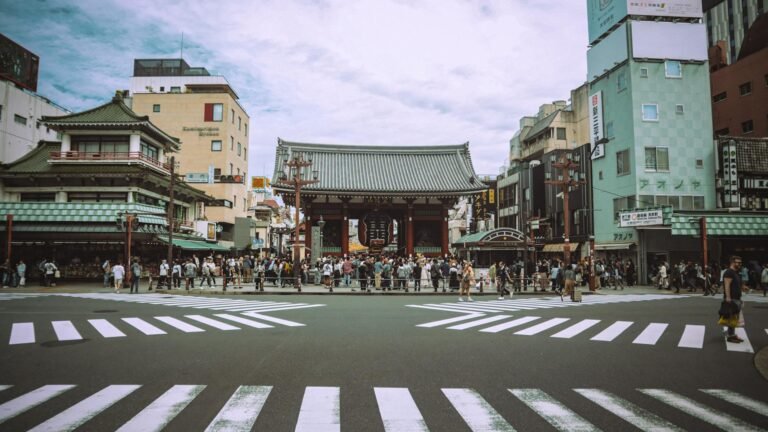
Japan is one of the safest countries on Earth. The trains run on time. Strangers return lost wallets. Crime rates are among the lowest of any developed nation. For most visitors, a trip to Japan unfolds exactly as planned — and often better.
But things still go wrong. Trains are missed. Wallets disappear. Earthquakes happen. A restaurant meal triggers an allergic reaction you didn’t anticipate. A typhoon grounds your flight. You step off at the wrong station at 11:45 PM and realize the last train home leaves in eight minutes from a platform you can’t find.
In those moments, even a handful of Japanese phrases can be the difference between panic and resolution. Japan’s service culture is extraordinarily helpful — but that helpfulness is far more accessible when you can communicate, even imperfectly.
This isn’t a vocabulary list. It’s a scenario-by-scenario guide for when your trip stops going according to plan. Read it before you go. Screenshot the sections most relevant to your itinerary. And if you want to practice these phrases until they’re genuinely automatic, our free trial lesson can be built entirely around emergency and travel Japanese.
Universal Emergency Phrases
These five phrases work in any crisis. They are your baseline — the phrases to learn first, practice most, and keep most accessible. If you learn nothing else from this article, learn these.
- 助けてください (tasukete kudasai — Please help me)
- 英語を話せる人はいますか (eigo o hanaseru hito wa imasu ka — Is there anyone who speaks English?)
- 警察を呼んでください (keisatsu o yonde kudasai — Please call the police)
- 救急車を呼んでください (kyuukyuusha o yonde kudasai — Please call an ambulance)
- ここはどこですか (koko wa doko desu ka — Where am I?)
助けてください is a distress signal that any Japanese speaker will recognize immediately. Say it clearly and repeat it if needed. It will prompt action.
英語を話せる人はいますか is particularly useful in public spaces, train stations, and department stores, where there is almost always at least one staff member with enough English to help. If your pronunciation isn’t perfect, showing this phrase written on your phone will work just as well.
Japan’s emergency services number is split: 110 for police, 119 for fire and ambulance. Both lines have English interpretation services available, though response time for interpretation can vary. If you’re calling yourself, state your emergency clearly and give your location as specifically as possible.
Medical Emergencies
Calling an Ambulance
Call 119 for an ambulance. When the operator answers, say:
- 救急車をお願いします (kyuukyuusha o onegai shimasu — I need an ambulance)
- ここの住所は何ですか (koko no juusho wa nan desu ka — What is the address here?) — ask a bystander or staff member this if you don’t know where you are
Japan’s ambulance response times in urban areas are fast — typically under ten minutes. Ambulance transport itself is free; hospital treatment is not. This is a critical reason to have comprehensive travel insurance before you arrive.
At the Emergency Room
Japanese emergency departments (救急外来 — kyuukyuu gairai) are efficient, but staff availability in English varies by hospital. Larger urban hospitals, particularly university hospitals and those near major tourist areas, are more likely to have English-speaking staff or access to telephone interpretation.
Useful phrases at the ER:
- ここが痛いです (koko ga itai desu — It hurts here) — point to the location
- ひどい痛みです (hidoi itami desu — It’s severe pain)
- 少し痛いです (sukoshi itai desu — It hurts a little)
- アレルギーがあります (arerugii ga arimasu — I have an allergy)
- 〇〇にアレルギーがあります (〇〇 ni arerugii ga arimasu — I’m allergic to 〇〇)
If you have food allergies, this last phrase is essential — not just in medical contexts, but in restaurants. Common allergen words in Japanese include: ナッツ (nattsu — nuts), えび (ebi — shrimp), 小麦 (komugi — wheat), 卵 (tamago — egg), 乳 (chichi/nyuu — dairy).
We cover navigating clinics, pharmacies, and prescription medications in depth in our complete guide to seeing a doctor or visiting a pharmacy in Japan.
Travel Insurance Is Not Optional
We’ll be direct: Japan’s healthcare is excellent. It is also not free for visitors, and hospital bills for serious emergencies can reach tens of thousands of dollars. Your provincial health plan — if you’re Canadian — covers essentially nothing outside the country. A solid travel insurance policy covers emergency evacuation, hospitalization, and in many cases provides Japanese-language medical coordination, which removes a significant barrier when you’re unwell and disoriented.
We recommend TuGo for Canadian travellers. Their policies include Japanese-language medical coordination, meaning someone can communicate on your behalf with hospital staff while you focus on recovering.
Lost and Stranded
Missing the Last Train
In Japan, trains stop. They run on precise schedules, and the last train — 終電 (shuuden) — is not flexible. In Tokyo, the last trains on most lines depart between 11:30 PM and 1:00 AM depending on the route. Miss it, and you have limited options until service resumes around 5:00 AM.
This is more common than visitors expect, particularly after dinners that run long or nights out in areas like Shinjuku or Shibuya. What actually happens to people in this situation: many end up in 漫画喫茶 (manga kissa — manga cafés) or カラオケ (karaoke) establishments, both of which offer overnight rates and are open 24 hours. They’re not uncomfortable. Manga cafés in particular often have private booths, Wi-Fi, showers, and unlimited drinks.
Taxis are the alternative, but they’re expensive for long distances. A cross-city taxi in Tokyo can cost ¥5,000–¥10,000 or more.
Key phrases:
- 終電に乗り遅れました (shuuden ni noriokuremashita — I missed the last train)
- ホテルまでどうやって行けますか (hoteru made dou yatte ikemasu ka — How do I get to my hotel?)
- 近くに漫画喫茶はありますか (chikaku ni manga kissa wa arimasu ka — Is there a manga café nearby?)
Lost in a Residential Area
- 道に迷いました (michi ni mayoimashita — I’m lost)
- 〇〇はどこですか (〇〇 wa doko desu ka — Where is 〇〇?)
- この住所に行きたいです (kono juusho ni ikitai desu — I want to go to this address) — show the written address on your phone
When Your Phone Dies
This is where preparation matters more than any phrase. If your phone dies or you lose signal, you lose your map, your translation app, and your contact list simultaneously. Japan’s residential areas — outside the major tourist corridors — are not always easy to navigate without digital assistance.
Reliable mobile data is not a luxury item in Japan; it’s a safety tool. We recommend having a dedicated eSIM as a backup to your primary data plan. Airalo eSIM options for Japan are affordable and activate instantly — worth having installed before departure as a fallback if your primary SIM fails or runs out of data at the wrong moment.
Crime and the Police
Japan’s Crime Rate in Context
Japan’s violent crime rate is genuinely exceptional. Petty theft is the most common crime affecting tourists — pickpocketing in crowded areas, bag snatching near train stations, and occasionally theft from hotel rooms or ryokan common areas.
If something is stolen or lost, your first stop is a 交番 (koban — police box). Koban are small neighbourhood police posts staffed by officers, and they are everywhere — you’ll find them outside major train stations, in shopping districts, and throughout residential neighbourhoods. They are your most accessible point of contact with the police, and the officers there are accustomed to helping confused or distressed visitors.
Reporting Theft
- 財布を盗まれました (saifu o nusumaremashita — My wallet was stolen)
- カバンを盗まれました (kaban o nusumaremashita — My bag was stolen)
- スリにあいました (suri ni aimashita — I was pickpocketed)
- 届出を出したいです (todokede o dashitai desu — I would like to file a report)
Filing a 届出 (todokede — police report) is important for two reasons: your travel insurance claim will almost certainly require it, and it creates a record if your documents turn up later (Japan has a remarkably high rate of lost items being returned).
Lost Passport
- パスポートをなくしました (pasupooto o nakushimashita — I lost my passport)
A lost passport requires two steps: file a police report at the nearest koban, then contact your country’s embassy or consulate. Emergency travel documents can typically be issued within one to two business days. Have your embassy’s contact number saved before you travel — do not rely on being able to find it quickly in an emergency. Canadian travellers should contact the Embassy of Canada in Tokyo at +81-3-5412-6200.
Natural Disasters
Japan’s Disaster Landscape
Japan sits on the Pacific Ring of Fire and experiences thousands of minor earthquakes each year. Major earthquakes, while infrequent, are a real possibility. Typhoon season runs roughly from June through October, with the peak in August and September. Tsunamis are a specific risk in coastal areas following significant offshore earthquakes.
The infrastructure for disaster response in Japan is among the best in the world. Buildings are engineered to strict seismic codes. Evacuation routes are clearly marked. Emergency shelters are pre-designated and well-stocked. The system works — but you need to know how to read it.
Key Disaster Vocabulary
- 地震 (jishin — earthquake)
- 津波 (tsunami — tsunami)
- 台風 (taifuu — typhoon)
- 避難所 (hinanjo — evacuation shelter)
- 避難してください (hinan shite kudasai — Please evacuate)
- 出口 (deguchi — exit)
- 非常口 (hijouguchi — emergency exit)
The J-Alert System
Japan’s J-Alert (全国瞬時警報システム — Zenkoku Shunji Keihoo Shisutemu) is a national emergency broadcast system that pushes alerts directly to mobile phones in affected areas. These alerts arrive as loud, distinctive alarms — you will not sleep through one. The message itself will be in Japanese, which is why knowing the key words above matters. An alert containing 津波 (tsunami) or 避難 (hinan — evacuation) tells you what action is needed regardless of whether you can read the full message.
NHK World broadcasts English-language emergency information during major disasters. Keep the NHK World app installed and notifications enabled.
Travel Disruptions and Train Reservations
During typhoons and significant weather events, JR train services may be suspended — sometimes with advance notice, sometimes rapidly. If you hold a JR Pass, reserved seat bookings can be transferred to alternative trains or future departures during service disruptions without additional fees. Approach the みどりの窓口 (midori no madoguchi — Green Window ticket counter) at any staffed JR station to rebook.
Transportation Emergencies
Wrong Train, Wrong Direction
Japan’s train network is genuinely complex. Express trains skip stations that local trains stop at. Trains split mid-route. In cities like Osaka, multiple private rail companies use overlapping lines with different fare systems. Getting on the wrong train — or going the wrong direction — is something even experienced Japan travellers do.
- 間違えました (machigaemashita — I made a mistake)
- 〇〇行きはどのホームですか (〇〇 yuki wa dono hoomu desu ka — Which platform goes to 〇〇?)
- 次の電車は何時ですか (tsugi no densha wa nanji desu ka — What time is the next train?)
- 〇〇に止まりますか (〇〇 ni tomarimasu ka — Does this stop at 〇〇?)
If you’ve gone past your stop or exited at the wrong station, approach any station attendant. They will help you without judgment — this happens constantly. You may need to pay a small fare adjustment (精算 — seisan) at an adjustment machine near the exit gate.
Stranded at a Rural Station
Rural Japan is beautiful and worth visiting, but train frequency drops significantly outside urban areas. Some rural lines run only a handful of trains per day. Missing a connection in a small town can mean a two-hour wait or longer.
- 次の電車はいつですか (tsugi no densha wa itsu desu ka — When is the next train?)
- タクシーはありますか (takushii wa arimasu ka — Is there a taxi?)
Many rural stations are unstaffed during off-peak hours. If the station is unmanned, look for a posted timetable (時刻表 — jikokuhyou) on the platform. Our guide to reading Japanese train stations will help you decode what you’re looking at.
For navigating train systems and asking directions in general, our guide to asking directions in Japanese covers the vocabulary and phrasing you’ll need in detail.
Practical Preparation
The phrases above are most useful when you don’t have to look them up in the moment. Here’s how to actually be prepared.
Screenshot Everything
Screenshots are offline. Your translation app is not. Take screenshots of the key phrases most relevant to your itinerary — medical phrases if you have health considerations, the disaster vocabulary if you’re travelling during typhoon season — and keep them in a dedicated album on your phone. This takes ten minutes and works without data or Wi-Fi.
Carry a Written Address Card
Write your hotel name and address in Japanese on a small card and carry it in your wallet, separate from your phone. If your phone dies, you can show this card to a taxi driver or station attendant. Ask your hotel to prepare this card for you at check-in — most will do it without hesitation.
Save These Numbers Before You Leave
- 110 — Police
- 119 — Fire and ambulance
- +81-3-5412-6200 — Embassy of Canada in Tokyo (Canadian travellers)
- Your travel insurance emergency line (found on your policy card)
- Your hotel’s direct phone number
Download Offline Maps
Google Maps and Maps.me both support offline map downloads. Download the regions you’re visiting before departure. An offline map won’t give you real-time transit information, but it will show you where you are and what’s around you — which is often enough to get oriented.
Frequently Asked Questions
What number do you call for emergencies in Japan?
Japan uses two emergency numbers: 110 for police, and 119 for fire and ambulance services. Both lines are available 24 hours a day. English interpretation is available on both lines, though there may be a brief wait to connect to an interpreter. If you’re reporting a medical emergency, state the nature of the emergency and your location as clearly as possible immediately after the operator answers.
Do Japanese police speak English?
English proficiency varies significantly among police officers in Japan. Officers stationed near major tourist areas and large international airports are more likely to have basic English. Officers at neighbourhood koban in residential areas may have little to none. In practice, most koban encounters with tourists are handled through a combination of gestures, written phrases, and occasional phone-based translation. Having your key information — hotel address, passport number, description of the incident — written out in advance helps significantly. The National Police Agency also maintains a tourist hotline at +81-3-3501-0110 that provides interpretation support.
What should I do if I lose my passport in Japan?
First, file a report at the nearest 交番 (koban — police box). Request a copy of the report (遺失届受理番号 — ishitsu todoke juri bangou — lost item report number) — you will need this for your embassy and for your travel insurance claim. Then contact your country’s embassy or consulate. For Canadians, the Embassy of Canada in Tokyo (+81-3-5412-6200) can issue an Emergency Travel Document, typically within one to two business days. Bring any remaining ID (driver’s licence, health card), your police report, and a passport photo if possible. If you don’t have a photo, the embassy or nearby photo shops can assist.
You Don’t Have to Be Fluent. You Have to Be Prepared.
None of the scenarios in this article require conversational Japanese to resolve. They require a handful of specific phrases, delivered with enough clarity that the person in front of you understands what you need. Japan’s culture of helpfulness will do the rest.
Even 30 minutes of structured practice can prepare you for these scenarios. You’ll remember phrases better when you’ve said them aloud, heard them corrected, and used them in a realistic context — not just read them off a screen.
Our free trial lesson can be structured around exactly the travel Japanese you need — including emergency phrases — so that when the moment comes, the words are already there.